Free Size vs Oversize: What Is the Difference?
Free size vs oversize comes down to one idea: free size is a sizing system, one size cut to fit a range of bodies, while oversize is a fit, a garment cut deliberately bigger than the body for a relaxed look and often still sold in S, M and L. A garment can be both at once, such as a free-size batwing dress that drapes loosely on a smaller frame.
Product titles often pair the two words, so it is easy to assume they mean the same thing. They answer different questions. Free size tells you how many sizes a style comes in; oversize tells you how loose it is meant to be. Once the difference between free size and oversize is clear, reading size charts and choosing a fit that suits you gets much easier.
Free size vs oversize: the short definitions
Free size means a style is made in one size only. The maker designs it to cover a wide range of bodies, for example a 32–48 in chest, using a loose cut, an elastic waist, ties or pleats. The goal is for many different people to wear the same garment.
Oversize is a way of cutting clothes deliberately larger than the body. The shoulder seams drop below the natural shoulder line, the body is wide and so are the sleeves. The goal is a relaxed look that does not touch the body. Many oversized garments still come in S, M and L so that the extra room stays in the proportions the designer intended.
Free size vs oversize at a glance
| Question | Free size | Oversize |
|---|---|---|
| What the word describes | How many sizes: just one | The cut: bigger than the body on purpose |
| Size options | None; one size per style | Usually S, M, L or more |
| How it fits different bodies | Loose cut, elastic, ties, pleats, stretch or drape | Extra width all over, in planned proportions |
| How it looks on you | Varies with your shape, from loose to close-fitting | Loose and slouchy, as designed |
| Numbers to check | The body range it fits, such as a 32–48 in chest | The garment's own measurements against yours |
| Good for | Being between sizes, changing weight, buying gifts | A deliberately relaxed or streetwear look |
Can a garment be free size and oversized?
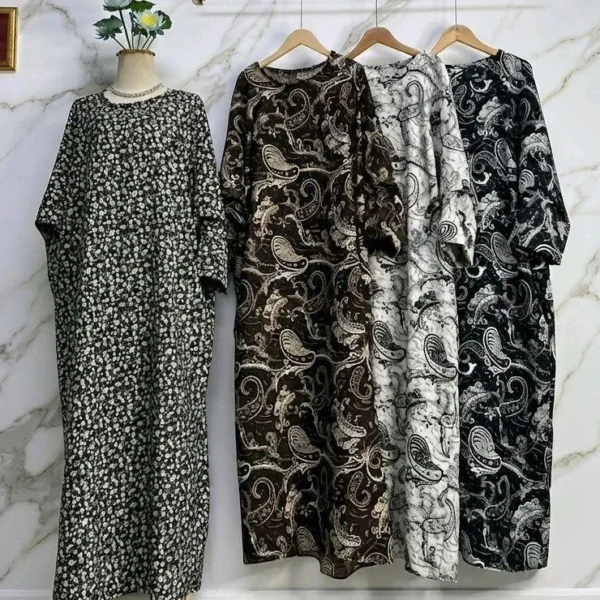
Yes, and it is common. A very roomy free-size style looks oversized on someone near the bottom of its range and more fitted on someone near the top. Our printed batwing maxi dress in Italian silk fits a 32–50 in chest. On a 34 in chest it falls wide and loose like an oversized dress; on a 48 in chest it skims the body more closely.
The reverse is not always true. Free size is not automatically loose. Some free-size styles, such as a shirt dress or anything with a fairly snug elastic waist, can fit closer than you expect, so do not read “free size” as “oversized”.
How to read the measurements
The easiest way to order the wrong fit is to read the wrong kind of number. Online size charts usually show one of two things:
- The body range that fits. “Chest 32–48 in” means the garment suits wearers whose chest falls in that range. Free-size listings often work this way, and so do the chest ranges on our product pages.
- The garment's own measurement. “Chest 50 in” measured around the garment itself is common for oversized tops. Subtract your own chest measurement to see how much ease, or extra room, you will have.
A quick way to judge an oversized top is to measure one you already like. Lay it flat, measure straight across from armpit to armpit and double the figure: that is the garment's chest measurement. If a new oversized top lists a similar number, it will feel about as loose; a bigger number means more room.
If a shop does not say which kind it uses, ask before you order, and always measure yourself with a tape rather than relying on your size in another shop. Our size guide shows how to measure your bust, waist and hips.
Which should you choose?
- Between sizes, or your weight changes: free size helps, because the range is wide.
- You want a deliberately slouchy look: pick an oversized style in your usual size, or a roomy free-size style where you sit near the bottom of the range.
- You are petite: pieces that are both very wide and very long can swamp a small frame. Look for a defined waist, such as a tie, or a slightly shorter top.
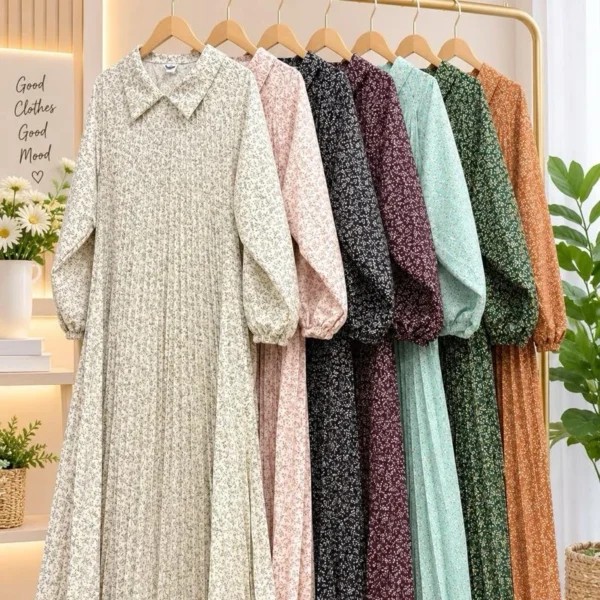
- You need something modest for work or the temple: both can work if shoulders and knees are covered and the fabric is not sheer. An A-line or collared free-size style looks neater than a very slouchy cut.
- You are plus size: check the top of the free-size range first. If your chest is close to it, the garment will fit closely rather than loosely. For a looser look, choose a style whose top figure is several inches above your measurement.
How to wear loose clothes without getting lost in them
Loose clothing looks intentional when something shows your shape. Try these:
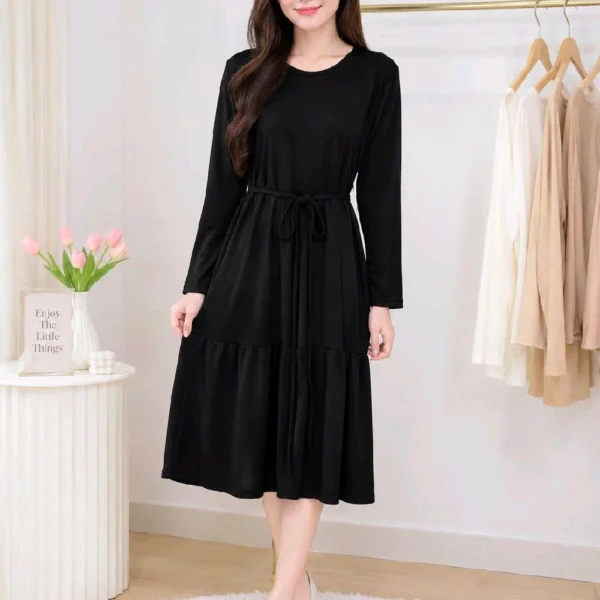
- Tie or loosely belt the waist. Our tiered long-sleeve dress with waist tie lets you set the waist yourself and fits a 36–54 in chest.
- Pair a loose top with a neater bottom, or the other way round, so you are not loose from head to toe.
- Roll the sleeves slightly to show your wrists. If you prefer to keep your arms covered, choose gathered or tie cuffs instead.
- Watch where the hem falls. A loose top that ends around the hip, or a half-tuck at the front, keeps your legs looking longer than one that stops mid-thigh.
- Wear one colour family from top to bottom for a long, unbroken line.
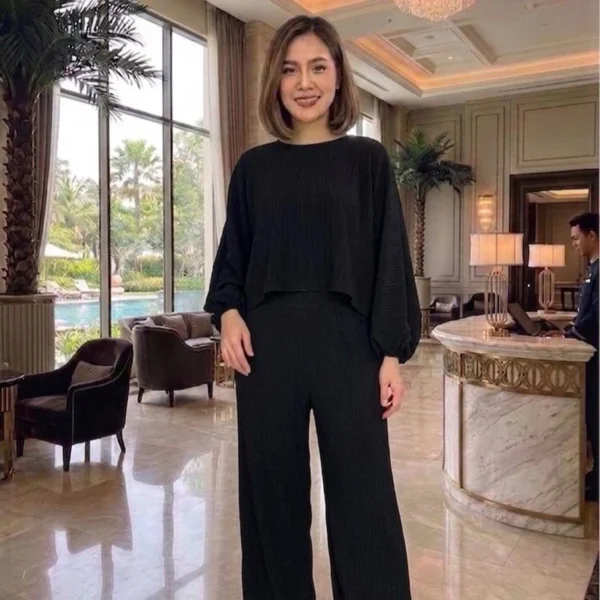
- Choose a set whose top and bottom were designed together, so the proportions already work. See our modest two-piece sets.
New to free size? Start with what free size means.