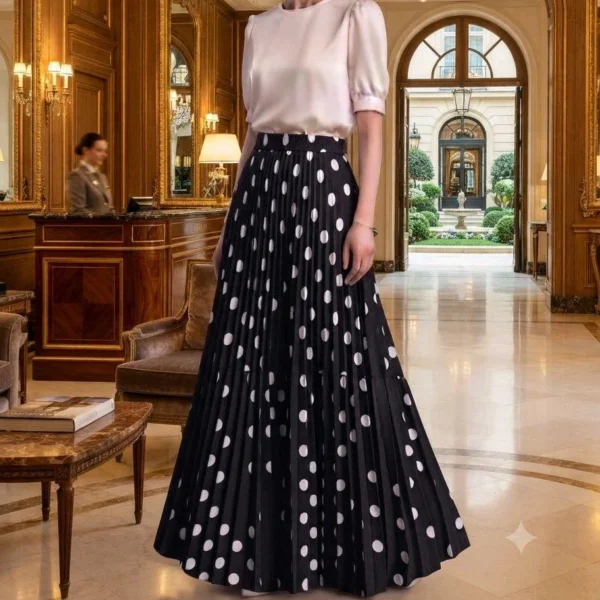
How to Wash a Pleated Skirt Without Losing the Pleats
How to wash a pleated skirt without losing the pleats: use cool water, hand wash or put it in a laundry bag on a gentle cycle, never wring it, and hang it in the shade while you line the pleats up as it dries. Most permanently pleated skirts need little or no ironing, and if you must, use a low or steam setting through a pressing cloth, pressing along each pleat. If the skirt has a care label, follow that first.
A pleated skirt with crisp pleats on the day you buy it can end up with crooked or flattened pleats after just a few washes done the wrong way. The good news is that the care is simple once you know how pleats hold their shape and what undoes them. At Veena Garment we make and sell our own pleated skirts and pants, such as our peony print pleated skirt in Italian silk. The advice below is general garment care that suits most pleated pieces; if yours has a care label, follow it first.
Why pleats lose their shape
Permanent pleats are made by folding fabric into pleats and setting them with heat and pressure. Synthetic fibres such as polyester “remember” the folded shape once they cool, which is why the pleats survive washing. But heat, the very thing that sets the pleats, can also undo them. The usual causes are:
- High heat from hot water, a tumble dryer or a hot iron, which relaxes the pleats or sets new creases in the wrong place.
- Twisting and hard spinning, which fold pleats the wrong way and leave wrinkles.
- A crowded machine, where the skirt is pressed flat under other laundry for a long time.
- Folding across the pleats for storage, which leaves crosswise creases that are hard to remove.
Pleats in cotton and other natural fabrics are usually just pressed in, so they relax with every wash and need pressing again.
Before you wash: prepare the skirt
- Read the care label, if there is one.
- Test for colour bleeding by pressing a damp white cloth against the inside of the hem. If colour comes off, always wash the skirt on its own.
- Turn it inside out to reduce rubbing on the face of the fabric and the print.
- Gather the pleats so they lie in order, then roll the skirt loosely lengthwise into a tube.
- Put it in a mesh laundry bag that fits snugly, not one so big that the roll comes undone.
How to hand wash a pleated skirt
- Mix a mild detergent into cool or room-temperature water.
- Soak the rolled skirt briefly, about 10–15 minutes. Do not leave it overnight.
- Squeeze gently along the pleats. Do not scrub or rub across them.
- Rinse in clean water until no suds remain.
- Press the water out gently along the length without wringing, or roll the skirt in a towel to absorb the excess.
Machine washing without ruining the pleats
If the label says the skirt can be machine washed:
- Always put the rolled skirt in a laundry bag.
- Choose a gentle, delicate or hand-wash cycle with cold water.
- Set a low spin speed, or just a short, light spin.
- Wash it with a few other lightweight items, not with jeans or anything with zips and hooks.
- Skip bleach and do not overdose detergent, as leftover residue makes fabric stiff.
- Keep it out of a hot tumble dryer.
Drying so the pleats line up
Drying matters as much as washing, because damp fabric is far easier to shape than dry fabric.
- Hang the skirt by its waistband on a clip hanger so it falls under its own weight.
- Run your fingers down each pleat from waist to hem, lining the pleats up section by section.
- Dry it in an airy, shaded spot, because strong sun can fade prints faster.
- For extra-sharp pleats, some people gather the pleats together while the fabric is damp, tie the skirt loosely in two or three places with a soft strip of cloth, and leave it to dry like that.
How to iron a pleated skirt
Most synthetic pleated skirts need little or no ironing if they are washed and dried well. If you have creases in the wrong places, or a section where the pleats have relaxed:
- Set the iron to the low setting for synthetics, or use a handheld steamer held a little away from the fabric.
- Lay one section of the skirt on the ironing board and arrange each pleat along its original fold.
- Cover it with a thin pressing cloth, such as a light cotton cloth.
- Press down and lift, working from waist to hem. Do not slide the iron across the pleats.
- Let the fabric cool before you move it, because warm fabric takes on new creases easily.
Never use a hot setting or rest the iron in one place, as synthetic fabric can turn shiny, melt or lose its pleats for good.
Storing and travelling
- Hanging is safer than folding. Use a clip hanger on the waistband and leave enough space in the wardrobe so the skirt is not crushed.
- If you must fold it, fold along the length of the pleats, never across them.
- For travel, gather the pleats in order, then roll or loosely twist the skirt and slip it into a fabric bag or the leg of an old pair of tights so the pleats stay together.
- When you arrive, hang it in the bathroom while you take a warm shower; the steam helps relax light creases.
Looking for outfit ideas? See what to wear with a long pleated skirt.
Quick reference: do and don't
| Step | Do | Avoid |
|---|---|---|
| Washing | Cool water, mild detergent, laundry bag | Hot water, bleach, overnight soaking |
| Spinning and wringing | Low spin, gentle squeeze along the length | Wringing, fast spin cycles |
| Drying | Hang in the shade, line up pleats while damp | Hot tumble dryer, long hours in strong sun |
| Ironing | Low heat or steam, pressing cloth, press along pleats | High heat, sliding the iron across pleats |
| Storing | Hang by the waistband, fold along the pleats | Folding across pleats, cramming the wardrobe |
The same rules apply to pleated dresses and pants, such as our rose print pleated pants in Italian silk. See all our pleated styles in the pleated collection, and if you are curious how Italian silk compares with satin, read Italian silk vs satin.