What to Wear to a Thai Temple: A Guide for Women
What to wear to a Thai temple as a woman: clothes that cover your shoulders and knees, are not tight or see-through, and have a modest neckline. A long-sleeved maxi dress, or a sleeved top with a long skirt or loose trousers, works almost everywhere, with shoes you can slip off, because shoes come off before you enter temple buildings. Rules vary between temples, so check the dress code of the one you plan to visit.
Temples are places where people pay respect to the Buddha, make merit and mark important family occasions, so dressing modestly is a way of showing respect to the place and the people around you. The good news is that you do not need special clothes. Whether you are sightseeing or joining a merit-making ceremony with family, an outfit that covers your shoulders and knees and is comfortable to sit on the floor in is enough for most temples. This guide gives general guidance that applies to most temples in Thailand; individual temples may have their own rules, so always check the signs or notices of the one you are visiting.
The basics that work almost everywhere
Some busy temples have staff checking clothing at the entrance, so it is worth getting these right before you leave home.
- Cover your shoulders. Avoid sleeveless tops, spaghetti straps and off-the-shoulder styles.
- Cover your knees. Skirts and trousers should fall below the knee, and ankle length is easier still, because hems ride up when you sit on the floor.
- Nothing tight. Choose cuts that do not cling, such as A-line, straight or pleated styles.
- Nothing see-through. Some light fabrics look opaque indoors but turn sheer in sunlight. Check in front of a mirror with light behind you.
- A modest neckline, front and back.
- Prints and slogans: avoid words or images that could come across as disrespectful.
Comfortable temple outfit ideas for women
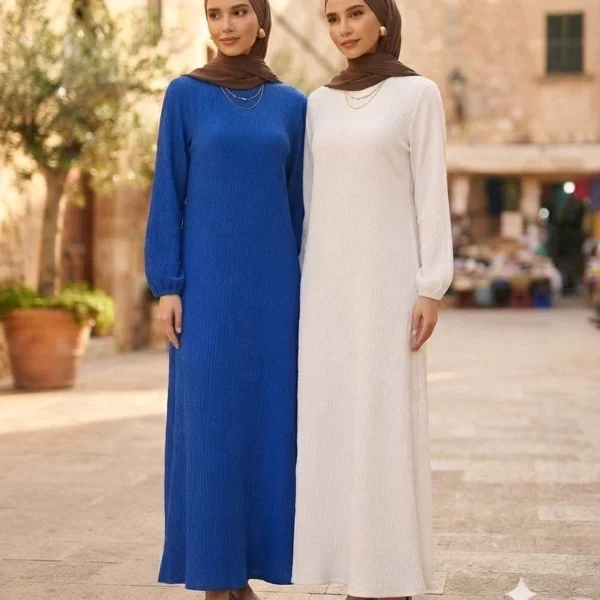
A long-sleeved maxi dress
One piece covers both arms and legs. Our long-sleeve A-line maxi dress in toffee is 55 in long and fits a 32–48 in chest, and its A-line skirt flares enough to sit on the floor comfortably. See more styles among our free-size modest maxi dresses.
A long-sleeved top with a long skirt
The classic option, and an easy one to vary. Choose a top that covers the waistband and a full skirt, such as a pleated or A-line style. If you would rather not match pieces yourself, a top and skirt designed as a set does it for you; see our modest two-piece sets.
A top with loose trousers
Good for days with lots of walking or stairs. Wide-leg or pleated trousers look more respectful than tight trousers or leggings. Wear them with a top long enough to cover the hips.
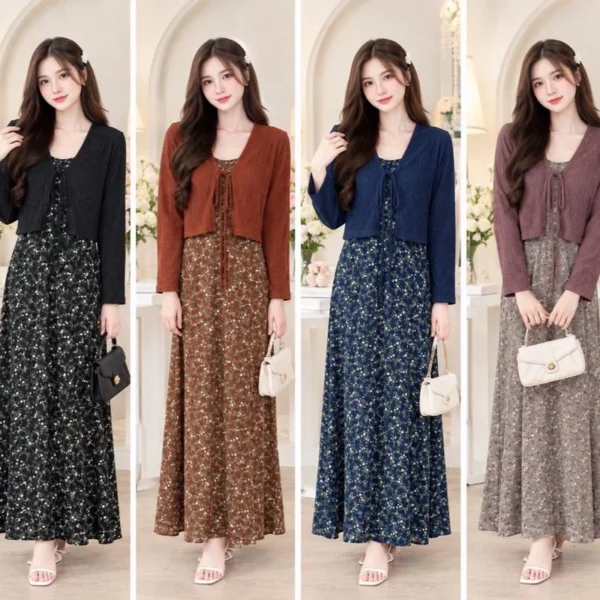
A dress with a shawl
A light shawl is worth keeping in your bag. It covers your shoulders in the hall, shades you from the sun in the courtyard and keeps you warm in air-conditioned buildings. Some outfits come with a matching one, such as our slub maxi dress with matching shawl.
Sitting on the floor and taking off your shoes
Inside the main halls, people usually sit on the floor with their legs folded to one side, feet pointing behind them and never toward a Buddha image or a monk. Narrow or short outfits make this position awkward and leave you tugging at your hem. Try sitting like this at home before you go: if the hem rides above your knees or the fabric pulls tight across your hips, switch to something fuller.
Shoes generally come off before you enter the ordination hall, the assembly hall and any building that houses a Buddha image. Slip-on sandals or flats that you can take off and put on quickly are easier than lace-ups. Avoid high heels, as some temple courtyards are uneven.
Colours for different temple occasions
This table sums up common practice. Customs can differ between families and regions, so if you are attending someone else's ceremony, it is kind to ask the hosts first.
| Occasion | Usual colours | Good to know |
|---|---|---|
| Visiting or making merit | Plain colours, pastels or modest prints | Avoid anything too loud |
| Funerals and funeral chanting, often held at temples | Black, or plain white, grey or navy | By Thai custom, avoid eye-catching prints |
| Meditation retreats or keeping the precepts | White | Some places specify the style of top and the skirt length, so ask for the list in advance |
| Ordinations and other celebrations at the temple | Any modest colour | Check whether the hosts have asked for a colour or theme |
Staying cool in the heat
A temple visit often means walking outdoors and standing for a while, so covered-up clothes also need to be comfortable. Loose cuts that do not touch the body let air move, and light-coloured, lightweight fabrics absorb less heat from the sun than dark ones. Thin long sleeves keep direct sun off your arms. Bring water, a hat or a folding umbrella, and a light shawl for both the sun outside and the air conditioning inside.
A little etiquette worth knowing
- Speak quietly and silence your phone inside the ordination hall or during a ceremony.
- By common custom, women do not touch monks or hand things to them directly. If you offer something, place it on the cloth the monk lays out to receive it.
- Do not climb or sit on the bases of Buddha images, stupas or temple walls for photos.
- Some buildings do not allow photography. Check the signs or ask staff first.
Checklist before you leave
- Your shoulders and upper arms are covered, or a shawl is in your bag.
- Your skirt or trousers stay below the knee, even when you sit.
- The fabric is not see-through in sunlight.
- You can sit with your legs folded to one side without tugging at the hem.
- Your shoes come off easily and grip well on courtyard paving.
- You have checked the dress code of the temple you are visiting, on its signs or online channels.
For more ways to style a long skirt modestly, see what to wear with a long pleated skirt.